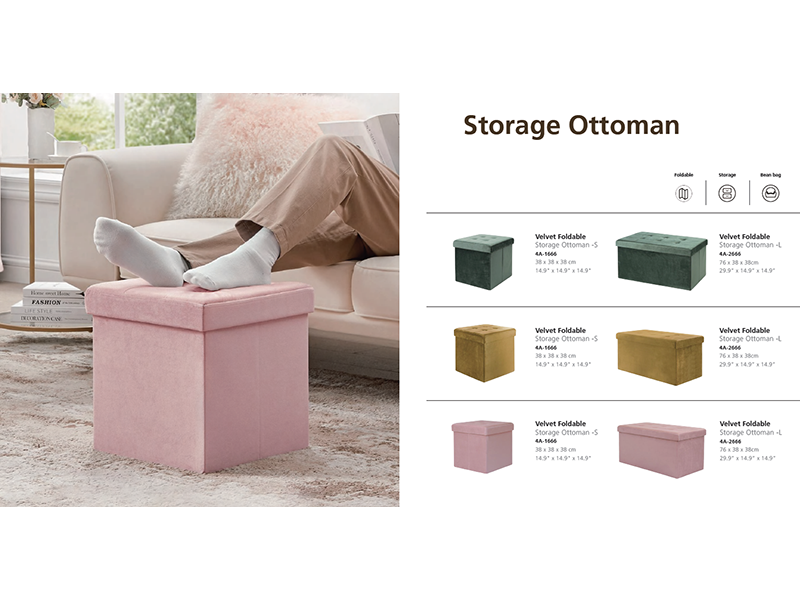
What should a buyer check first on a striped fabric storage line? Not the stripe — the zipper, the handle attachment and what holds the box up when it is half empty. Stripe is a 2026 merchandising opportunity; collapse, snagged zippers and odour are what generate the returns. Treat the pattern as the reason to look, and the construction as the reason to order. For a retailer building a private-label soft-storage set, that is a sourcing decision first, and it is where a vertically integrated maker such as ALL STAR HOUSEWARE LTD, which has built home storage since 1999, can be checked on specifics a trading intermediary cannot answer.
Fabric storage has outgrown its role as a cheap filler. The global fabric storage cube market is estimated at about US$2.35 billion in 2025 and projected to reach roughly US$2.58 billion in 2026, a CAGR near 9.8%, with forecasts pointing to US$3.7 billion by 2030 (The Business Research Company, 2026). In the EU, fabric storage bins are structurally import-dependent — about 75–85% of units come from Asia, largely China, India and Vietnam — and unit demand is growing 4–6% a year, with premium and designer-led segments expanding 7–10% (IndexBox, 2026).
Two trends sit behind those numbers. Collapsible, fabric-based storage is growing roughly 7–9% a year, faster than rigid plastic, as smaller urban homes and modular shelving reward pieces that fold, stack and match (IndexBox, 2026). And stripe is having a moment: "stripe drenching" — the all-over striped interior — is named among the defining decor directions of 2026, while soft minimalism and quiet-luxury storage push retailers toward coordinated, textural, neutral-toned ranges (Real Dream House; Dwello, 2026). A striped fabric line that spans boxes, bags, laundry and hanging organisers lets a buyer build one shelf-ready story instead of assembling a set from unrelated suppliers.
The commercial logic is straightforward. A coordinated line raises basket size, makes end-caps easier to dress, and gives a private-label program a coherent look on the floor. The risk is equally clear: in the mass tier, return rates for bins that collapse or sag run around 4–8% (IndexBox, 2026), and most of those returns are traceable to decisions made at the specification stage.
The stripe is what the shopper sees first, so specify how it is made. Cationic or polyester fabrics are generally more abrasion-resistant and less prone to wrinkling than basic non-woven polypropylene; non-woven is cheaper and breathable but scuffs and stays wipe-clean rather than washable (buyer guides, 2026). Ask whether the stripe is woven, yarn-dyed or printed, and require a rub fastness result on the finished fabric, not a claim about the yarn. For EU programs, dye and finish compliance under REACH is a sourcing requirement, not an option (IndexBox, 2026). A stripe that fades or crooks onto a light shelf after a season will cost more in claims than the fabric saved.
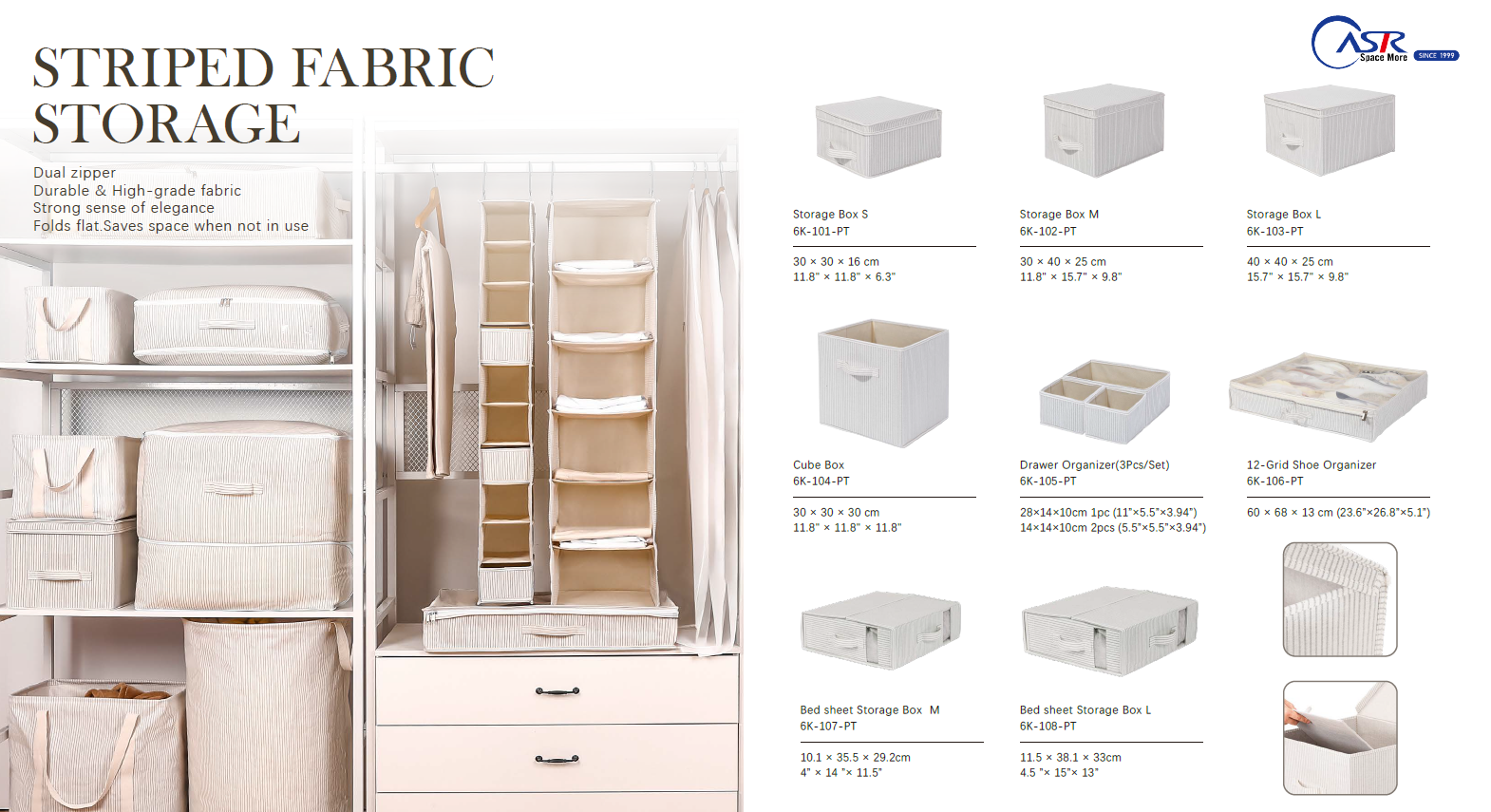
The two most repeated failures in fabric storage are a zip that snags or will not close to the corner, and handles that pull away on the first loaded lift (Homenkitchenshop; Joybuy buyer guides, 2026). Double zippers — a feature of the 6K striped range — are useful only if they run smoothly under a packed load and the pull is big enough to grip. Specify a cycle test on the filled bag, reinforced webbing sewn through the body rather than stitched onto the surface, and a clear pull-out force for the handle. These are starting points to settle with your own QS team, not universal thresholds.
A collapsible box that only looks good when full is a returns generator. Unreinforced sides buckle and the base sags under modest weight; a separate rigid base panel or an internal frame changes the product completely (Joybuy buyer guide, 2026). Decide by use: lightweight inserts suit scarves and socks, while a reinforced base or frame is needed for books, linens and anything stacked. Ask the factory which support system is in each SKU and at what load the panel begins to bow. Where a line is merchandised as "fits Kallax," note that a standard cube shelf wants a box around 32–33 cm; the 30 cm cube in this range leaves useful clearance, but the filled dimensions should be confirmed rather than assumed.
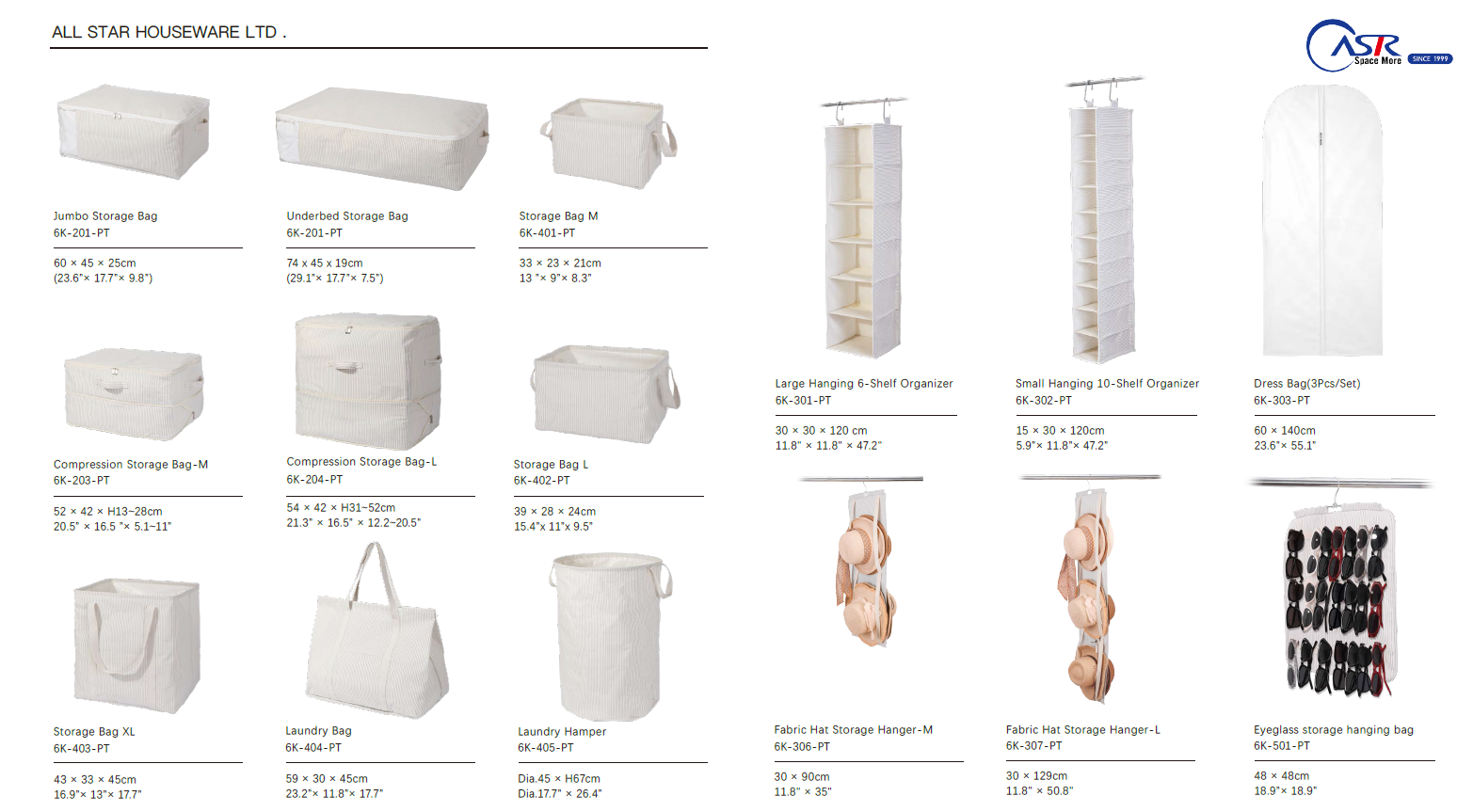
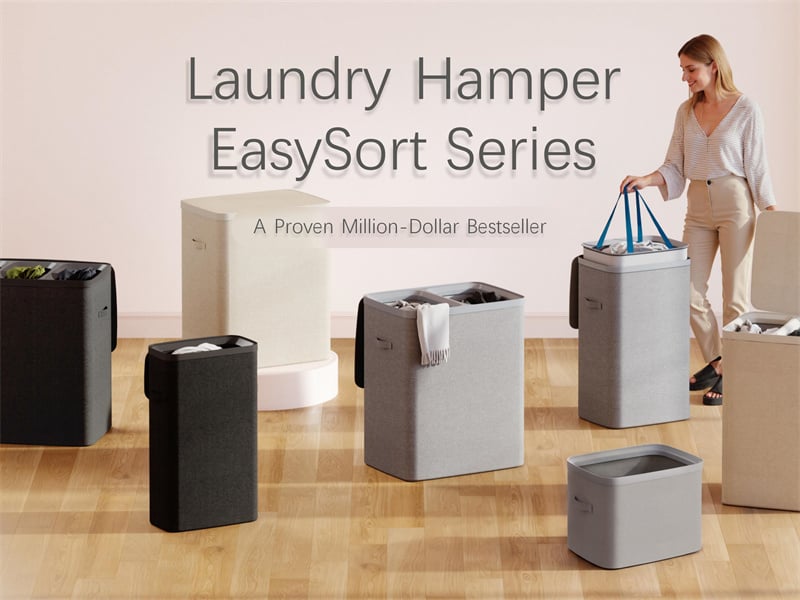
The practical value of a line like the 6K striped collection is breadth: cube boxes and drawer dividers for shelves, storage bags and jumbo bags for seasonal bedding, a flat under-bed bag, laundry bag and hamper, compression bags, hanging 6- and 10-shelf organisers, a dress bag, and specific hat and eyeglass hangers. A buyer does not need every SKU in every door. Pick an anchor set per room — bedroom, laundry, entry — and check the size ladder hangs together, so a small and large box on the same shelf read as a family rather than two unrelated products. Weight capacity on the larger bags and a stated volume (a 90-litre class for bulky duvets is a common reference) help the floor team sell without guessing.
The decisive question is who controls the processes that fail. A trading company can show the same striped catalogue as anyone; a maker that runs its own sewing line and controls related plastic and metal component supply can hold fabric, reinforcement, webbing and seams to one quality system, and can name the fabric weight, the zip supplier and the handle test without a call to a third party. ALL STAR HOUSEWARE LTD is one example of that model: its own sewing, plastic and iron-frame factories alongside overseas production, more than 400 design patents, and a twelve-person design team that develops private-label programs across a full room set. It works to ISO 9001, BSCI and Sedex standards after audits for retailers including Woolworths, Kmart, Primark and Adeo, with AQL 2.5/4.0 piece-by-piece inspection and broken-needle detection on sewn goods.
Those are baseline credentials a buyer verifies, not a reason to place an order on their own. The real evidence is a filled sample that passes your zipper-cycle, handle-pull, collapse and rub-fastness tests — thresholds here are starting ranges to settle with the supplier's QS team, not universal guarantees. One practical advantage of an integrated supplier is that a single purchase order can combine fabric boxes, bags and hanging organisers under one quality system, which is what makes a coordinated striped floor set feasible rather than a logistics exercise.
 About the supplier model
ALL STAR HOUSEWARE LTD has manufactured and exported home storage since 1999. It runs its own sewing, plastic and iron-frame factories together with overseas production, holds more than 400 design patents, and works to ISO 9001, BSCI and Sedex standards after passing audits for retailers including Woolworths, Kmart, Primark and Adeo. Its twelve-person design team develops private-label programs, and a single purchase order can combine fabric, plastic, metal and furniture storage under one quality system (AQL 2.5/4.0, piece-by-piece inspection).
In soft storage, the stripe sells the shelf and the construction keeps it there. A buyer who fixes the fabric, the zipper, the support system and the room-by-room size ladder on paper — and verifies them on a filled sample — turns a trend-led line into a program that holds its margin.
Buyers planning more home storage products welcome Contact : [email protected]

 EN