Natural-fiber storage has become an important part of modern home organization, particularly in collections designed around natural materials, Scandinavian, Japandi, rustic and contemporary interiors.
For retail buyers, however, sourcing seagrass, rattan or water-hyacinth storage is not simply about finding attractive baskets. The real sourcing questions are more practical: Can the supplier maintain consistent quality? Can it support private label? What is the MOQ and lead time? How are natural materials controlled? Can the supplier meet retail compliance requirements? And can natural-fiber products be combined with other home-storage categories?
Vietnam has an established manufacturing and export base for woven and natural-material homeware. At the same time, retailers looking to build a broader home-organization program may benefit from a supplier with manufacturing capabilities across both Vietnam and China.
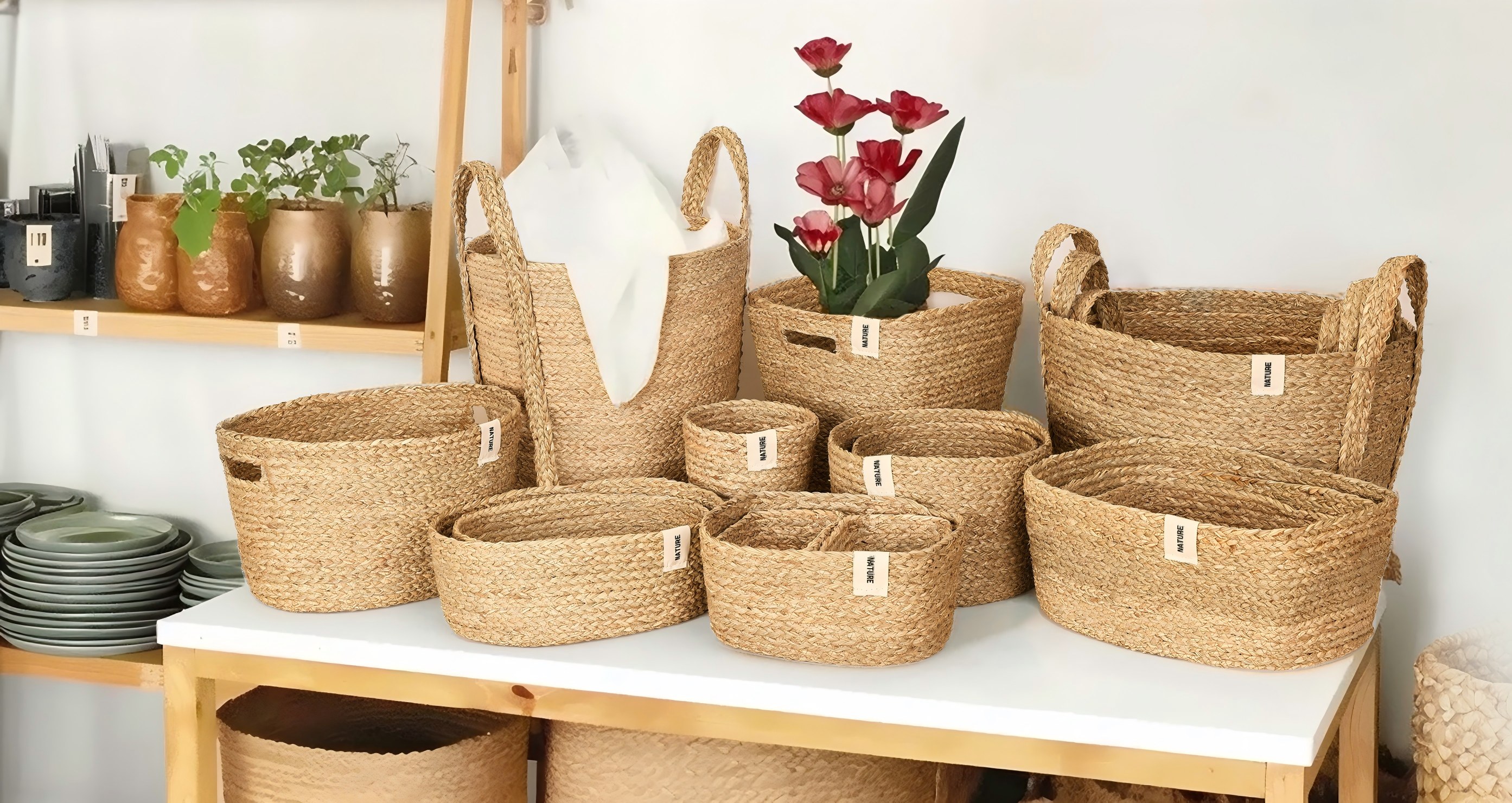
Vietnam has a long-established manufacturing ecosystem for rattan, bamboo, seagrass, water hyacinth and other woven products.
Vietnam Customs data reported exports of rattan, bamboo, sedge and mat products of approximately US$574 million during the first eight months of 2025, representing 5.4% year-on-year growth. The United States accounted for approximately US$266 million, or 46.3%, of exports during that period.
For international retailers, this means Vietnam is not simply a handicraft destination. It is an established sourcing base for commercial natural-fiber homeware.
Common retail applications include:
However, the country of origin alone does not determine whether a supplier is suitable for a retail program. Buyers should evaluate the supplier’s production control, material sourcing, quality system, compliance documentation, MOQ and ability to scale.
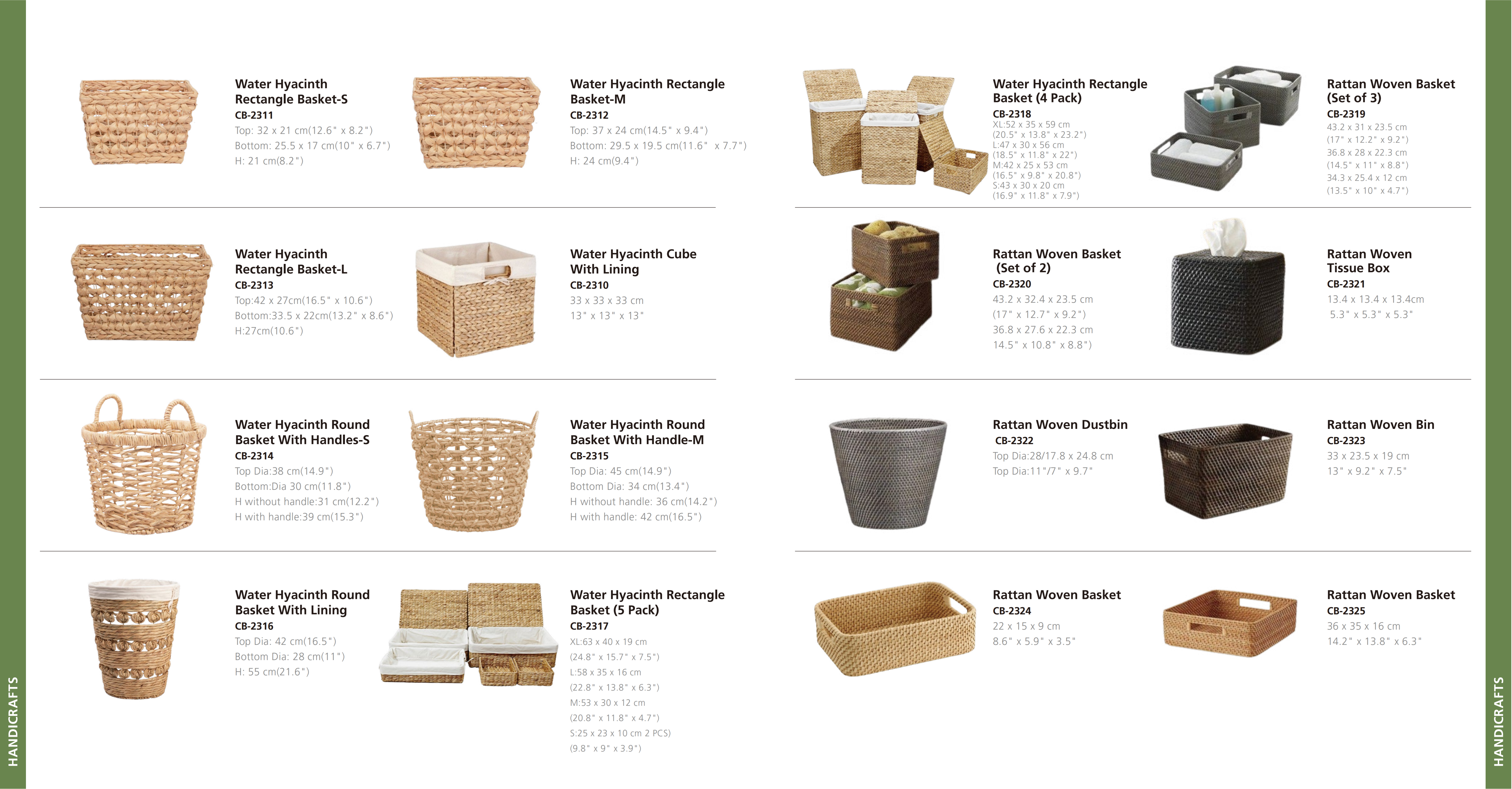
Different natural fibers offer different combinations of appearance, structure and application.
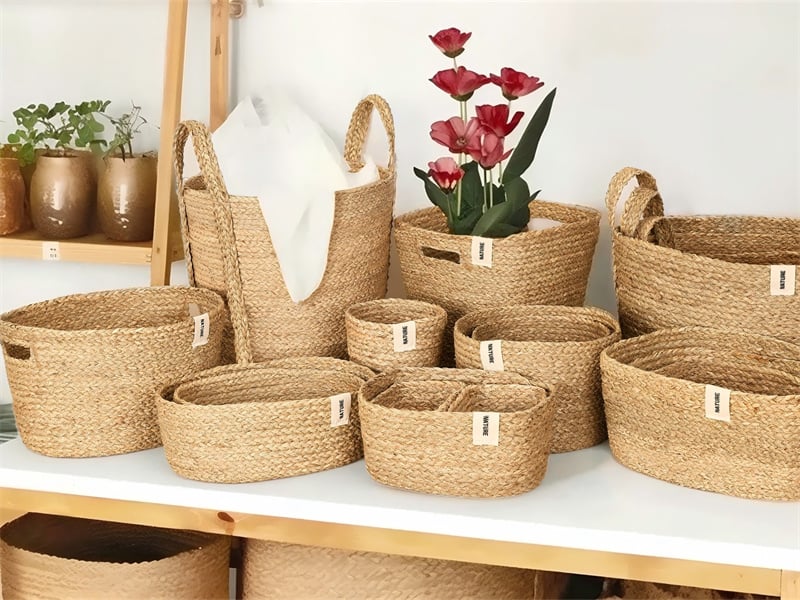
Seagrass is widely used for baskets, bins and decorative home organization. It works particularly well for:
Its main retail advantage is its natural texture and handcrafted appearance.
Water hyacinth is often selected for products where a stronger handcrafted and decorative appearance is required.
Typical applications include:
Rattan is often used where a more structured or premium appearance is required.
Typical applications include:
Bamboo is suitable for more rigid storage structures and is commonly used in bathroom, kitchen and household organization.
Buyer takeaway: The best material depends on the product’s intended use, construction, target retail price and required appearance—not simply on which material looks most attractive in a sample.
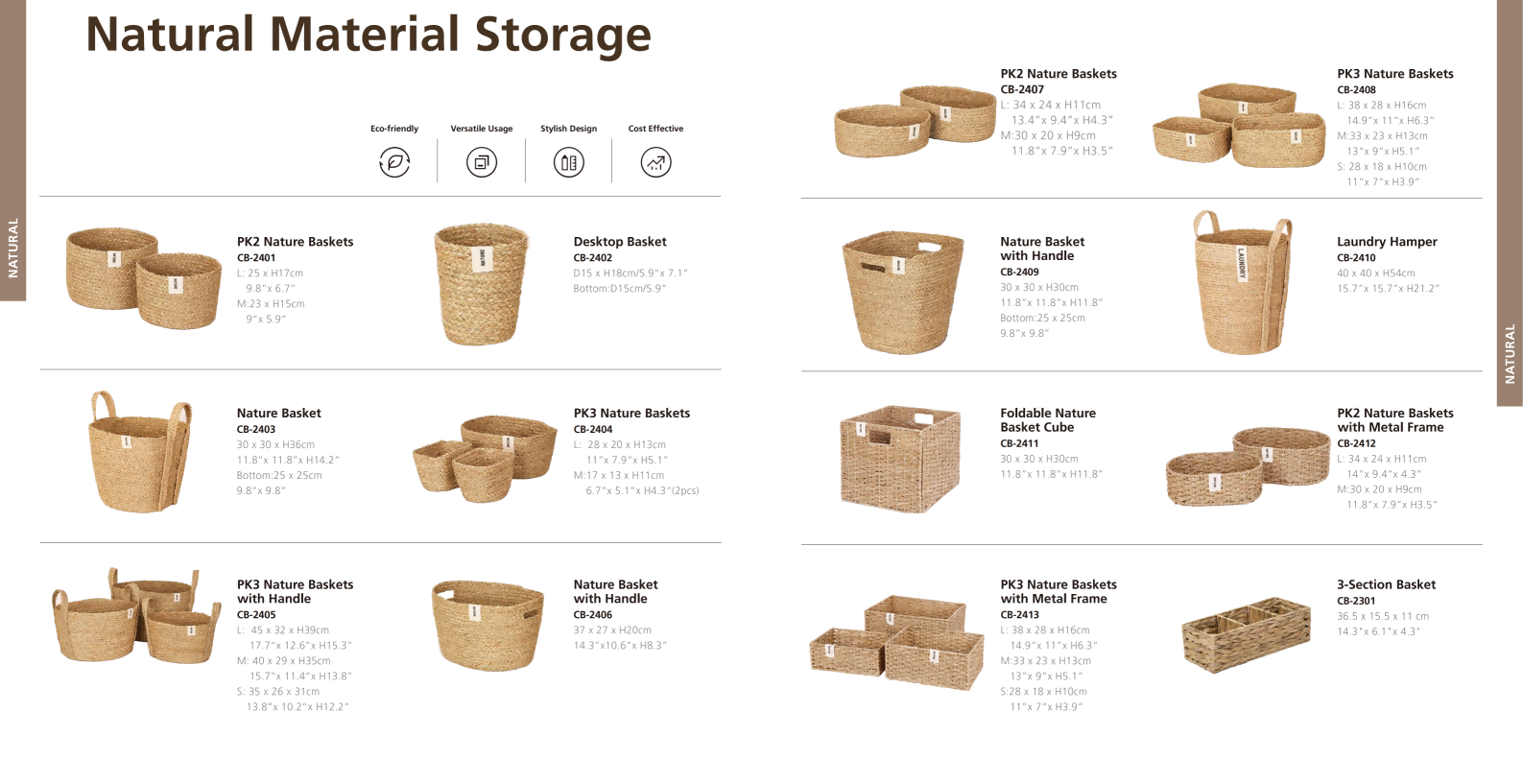
Natural-fiber and plastic storage generally serve different retail needs rather than competing directly.
|
Factor |
Natural-Fiber Storage |
Machine-Made Plastic Storage |
|
Visual positioning |
Natural, decorative, premium |
Functional, clean, practical |
|
Material story |
Natural-material appeal |
Durable and washable |
|
Dimensional consistency |
Requires strong QC |
Generally high |
|
Water resistance |
Material dependent |
Generally high |
|
Price positioning |
Mid to premium |
Value to mid |
|
Production complexity |
Higher |
Highly standardized |
|
Best applications |
Living room, bedroom, closet |
Laundry, bathroom, utility |
|
Main sourcing concern |
Material and weaving consistency |
Commodity pricing and differentiation |
For many retailers, the strongest assortment is not “natural fiber or plastic.”
It is natural fiber + plastic, with each material used where it creates the strongest consumer and commercial value.
Natural-fiber products can provide visual differentiation and premium positioning, while plastic products can cover utility-focused applications that require durability, washability and dimensional consistency.
This becomes particularly valuable when a retailer wants to build a complete home-organization assortment rather than a single basket collection.
A good showroom sample does not prove that a supplier can deliver consistent commercial production.
Before placing an order, buyers should evaluate six areas.
Ask whether the supplier controls production directly or relies mainly on independent trading partners.
Important questions include:
Direct production control generally provides greater visibility into quality, engineering and production scheduling.
Natural fibers naturally vary in:
The supplier should therefore have defined material specifications and inspection procedures.
Buyers should ask about:
A production sample approved before mass production should be used as the reference standard for final inspection.
Retail buyers should request current documentation rather than relying only on certification logos displayed online.
Depending on the retailer and market, requirements may include:
European buyers should also evaluate environmental requirements according to the actual material and product classification.
An important distinction is that not every natural material automatically falls under the EU Deforestation Regulation (EUDR). The current framework covers specified relevant commodities and products, while bamboo and rattan are outside its current scope.
Even where EUDR does not apply, retailers may still request material sourcing information, responsible-sourcing documentation and greater supply-chain transparency.
Natural-fiber storage is a visually competitive category. If every supplier offers the same basket shape, differentiation becomes difficult.
A capable supplier should be able to support:
For retail programs, product-development capability can be more valuable than simply having a large existing catalogue.
Supplier fragmentation can create hidden costs.
A retailer may need:
Managing every category through a different supplier increases the workload for purchasing, quality control, compliance, packaging and logistics.
A supplier capable of combining multiple home-storage categories can simplify the sourcing process and support a more consistent retail collection.
The most useful question is not always whether Vietnam or China is better.
For many retailers, the better question is:
Which sourcing model provides the best combination of product capability, cost, flexibility and supply-chain resilience?
|
Capability |
Vietnam |
China |
|
Natural woven products |
Strong |
Strong |
|
Seagrass / water hyacinth |
Strong |
Available |
|
Plastic storage |
Supplier dependent |
Very broad manufacturing base |
|
Fabric storage |
Available |
Very broad manufacturing base |
|
Metal-frame products |
Available |
Very broad manufacturing base |
|
Product development |
Supplier dependent |
Strong |
|
OEM/ODM ecosystem |
Strong in selected categories |
Very strong |
|
Category consolidation |
Supplier dependent |
Strong |
|
Multi-origin strategy |
Requires coordination |
Can be coordinated by capable groups |
For a retailer purchasing only natural-fiber baskets, a specialized Vietnam supplier may be the right solution.
For a retailer developing a broader home-organization program, a supplier with both Vietnam and China production capabilities can reduce supplier fragmentation.
A multi-origin model does not mean moving every product to Vietnam.
Instead, products can be allocated according to manufacturing strengths.
The advantage is not simply having two production countries.
The real advantage is having one coordinated sourcing relationship across multiple manufacturing locations.
For a retailer, this can simplify:
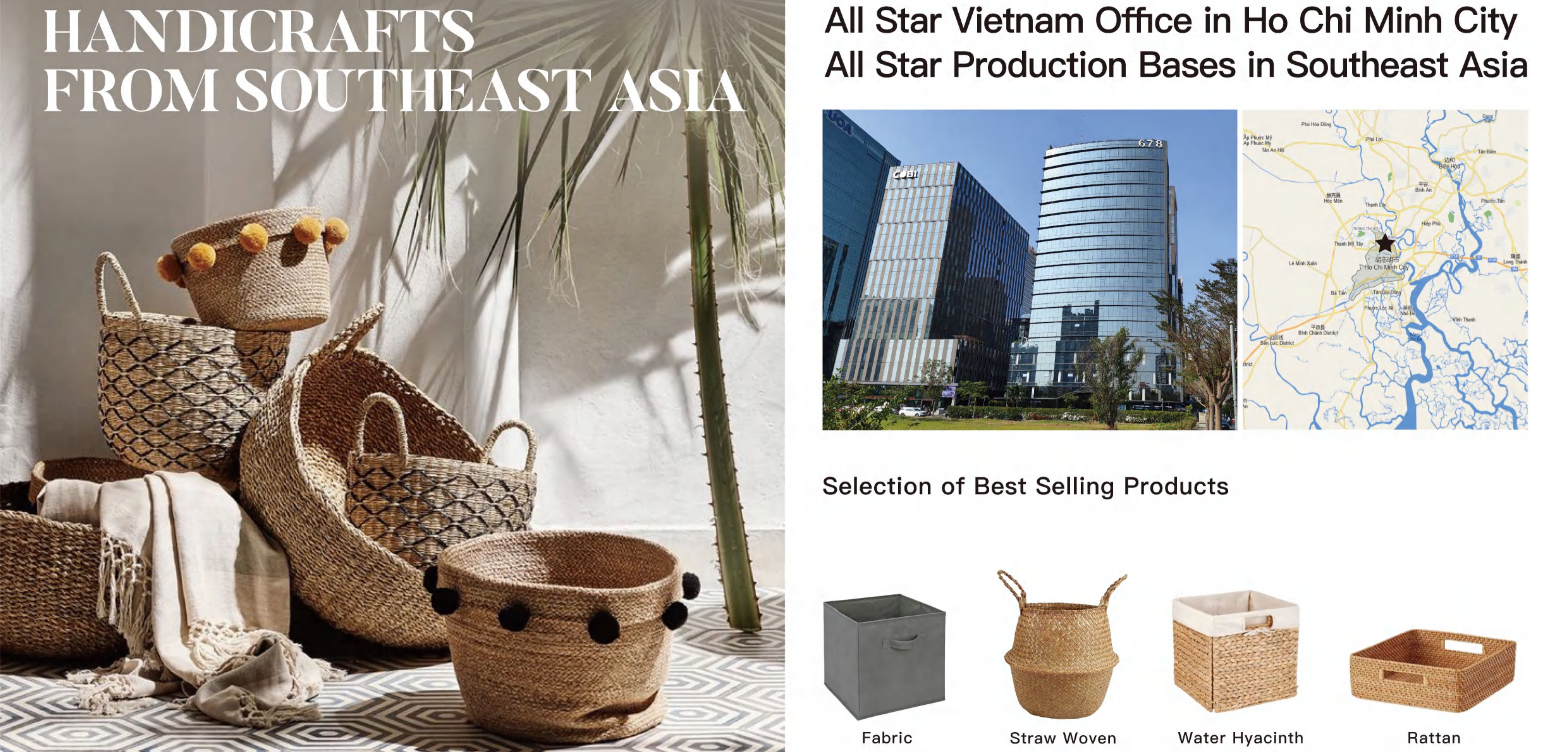
Established in Shanghai in 1999, ALL STAR HOUSEWARE LTD has developed from a traditional OEM/ODM supplier into a multi-category home-storage manufacturing partner.
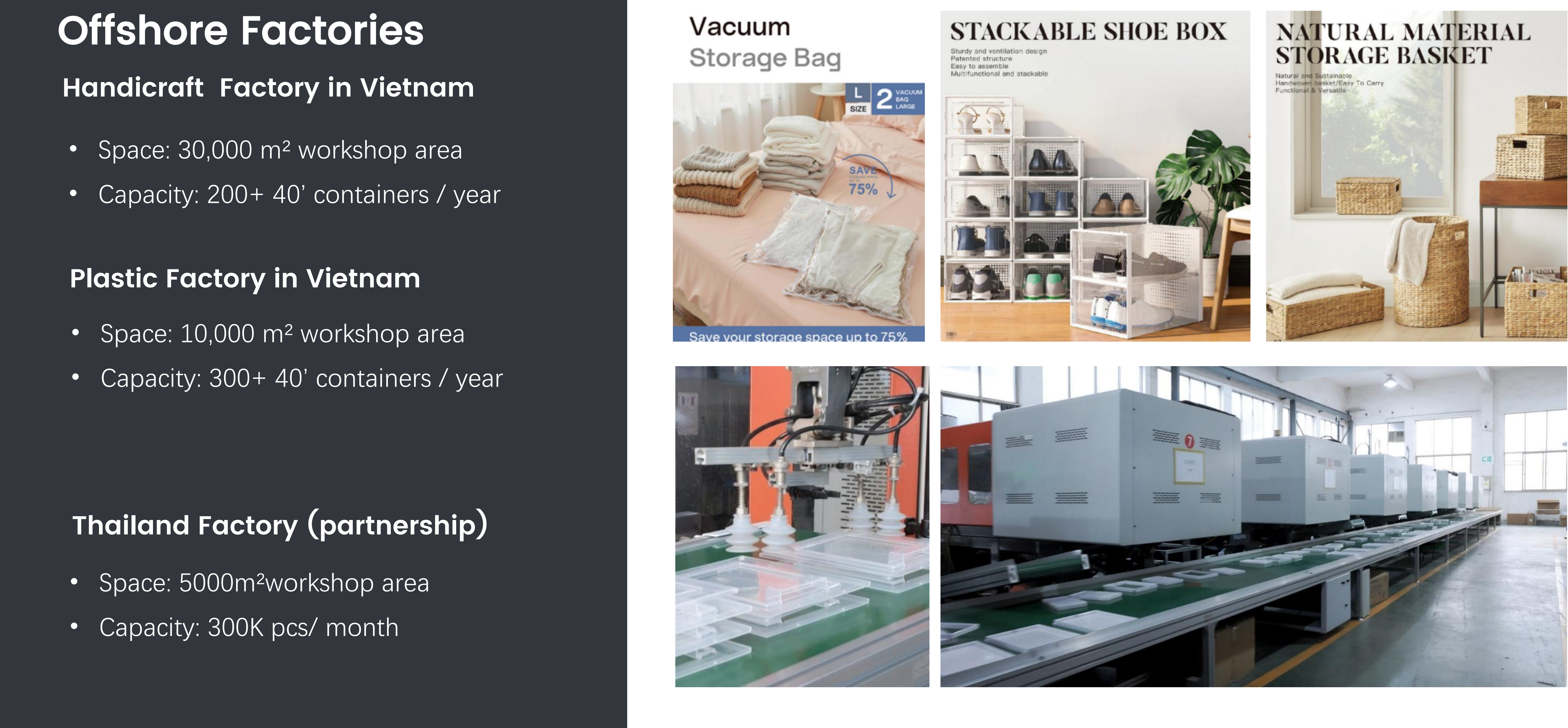
The company operates production capabilities covering sewing, plastic and metal-frame products, with additional manufacturing capacity in Vietnam and Southeast Asia.
Its product development system includes more than 400 product design patents, supporting original product development and private-label programs.
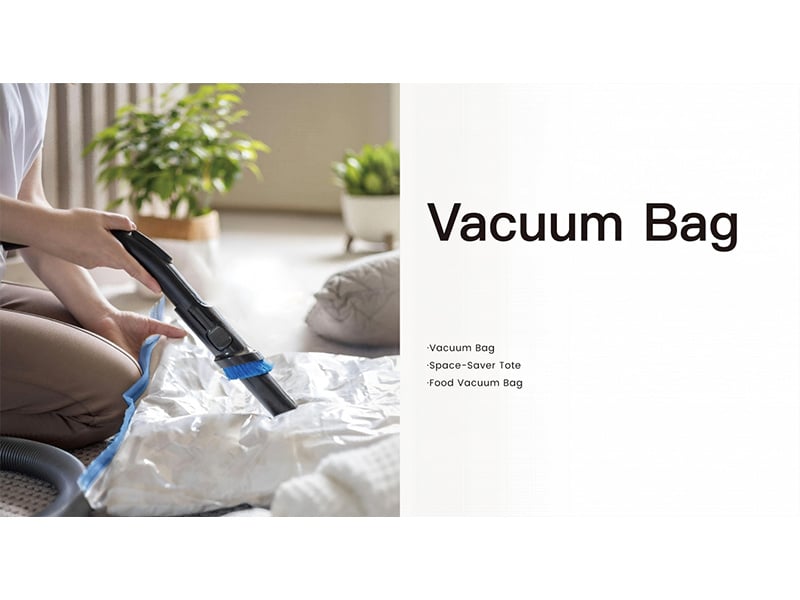
The company’s home-storage portfolio includes:
For retailers sourcing natural-fiber storage from Vietnam, the advantage is not simply access to woven products.
It is the ability to connect natural-fiber products with a broader home-organization assortment through one manufacturing partner.
This model can be particularly useful for retailers looking to develop a coordinated collection rather than purchasing individual product categories from multiple suppliers.
Yes. Vietnam has an established manufacturing and export ecosystem for rattan, bamboo, seagrass, water hyacinth and other woven products. However, buyers should evaluate individual suppliers based on manufacturing control, QC, compliance, MOQ and lead time rather than country of origin alone.
Seagrass, water hyacinth and rattan are common choices. The best material depends on the required structure, appearance, target price and intended application.
Check material consistency, moisture management, weaving quality, dimensions, structural strength, packaging, MOQ, production lead time and the supplier’s inspection system.
Neither is universally better. Natural fiber is generally stronger for decorative and premium home-organization applications, while plastic is better suited to washable, utility-focused and highly standardized products. Many retailers can benefit from using both.
Yes, where the supplier has manufacturing or coordinated production capabilities in both locations. This type of multi-origin sourcing model can reduce supplier fragmentation and simplify product development, compliance and logistics.
Natural-fiber storage can create strong visual differentiation and premium positioning for home-organization retailers. The key is to treat it as a manufacturing and sourcing program, not simply as a handicraft purchase.
For buyers looking to combine natural-fiber storage with plastic, fabric, metal and furniture-style home organization, a multi-category manufacturing partner can provide a more scalable sourcing model.
ALL STAR HOUSEWARE supports retailers, importers and private-label customers with home-storage manufacturing and product development across multiple material categories and production locations.
Looking for a natural-fiber storage supplier or a broader home-organization sourcing partner? Contact ALL STAR HOUSEWARE to discuss your product, MOQ, private-label and sourcing requirements.

 EN
EN