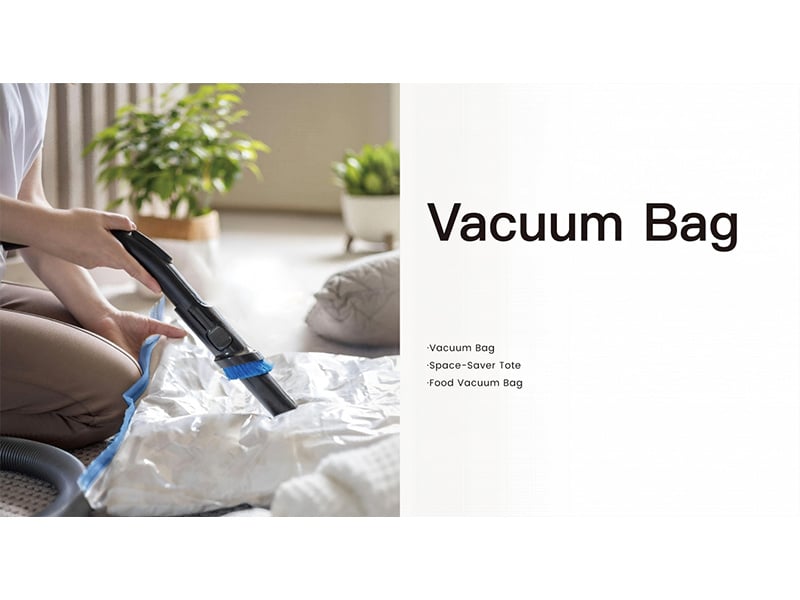
Vacuum storage bags are a practical space-saving solution for seasonal clothing, bedding, blankets and other bulky textiles. For retailers, the category fits naturally into home organization programs because it solves a clear consumer problem: reducing bulky items into a smaller storage footprint for closets, wardrobes and under-bed spaces.
The key buying question, however, is not simply whether a vacuum bag compresses. It is whether the bag can retain vacuum, maintain seal integrity, withstand normal handling, and deliver consistent quality across repeated production lots.
For this reason, buyers should evaluate more than the appearance of a showroom sample. Film structure, zipper performance, valve design, heat sealing, dimensional consistency, quality control, packaging and private-label capability all influence the final retail experience.
For retailers looking to build a broader home organization program, working with a manufacturer that can supply multiple storage categories can also simplify sourcing, packaging coordination and logistics.
Seasonal storage creates a recurring problem for consumers.
Summer clothing needs to make room for winter coats. Duvets and blankets take up valuable closet space. Pillows, comforters and other bulky textiles are difficult to organize in small wardrobes.
Vacuum storage bags address this problem by reducing the volume occupied by soft goods after air is removed from the bag.
This makes the category particularly relevant to:
Market research indicates that clothing and bedding storage represented the largest application segment of the global vacuum storage bag market in 2025, at approximately 57.7%. The same research estimated the global market at approximately USD 784 million in 2025, with a projected value of approximately USD 1.21 billion by 2032.
Because methodologies vary between commercial market research providers, these figures should be treated as market estimates rather than official industry statistics.
For buyers, the more important takeaway is straightforward:
Vacuum storage bags sit at the intersection of seasonal storage, space optimization and home organization.
That makes them suitable for both standalone product programs and broader storage collections.
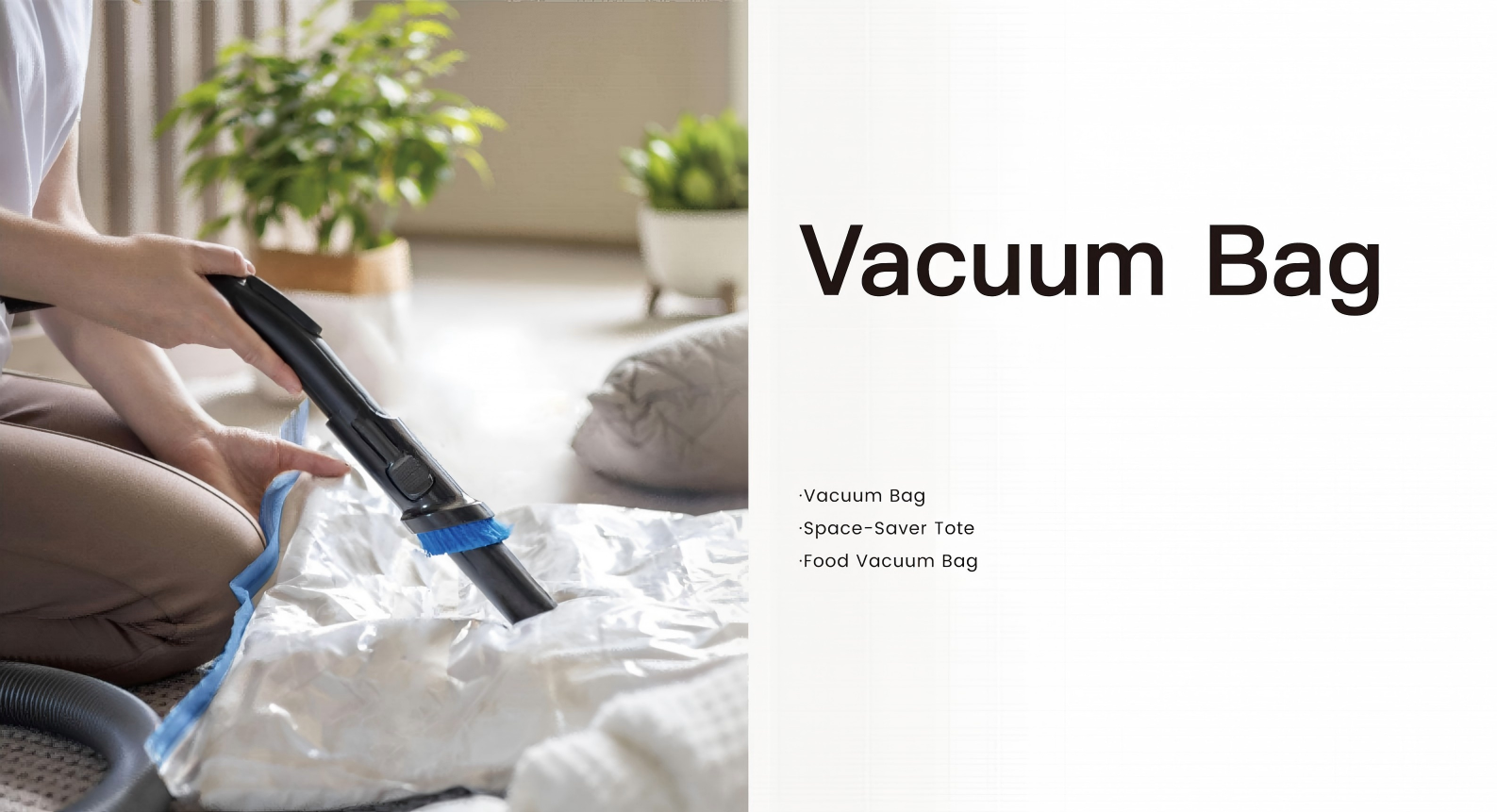
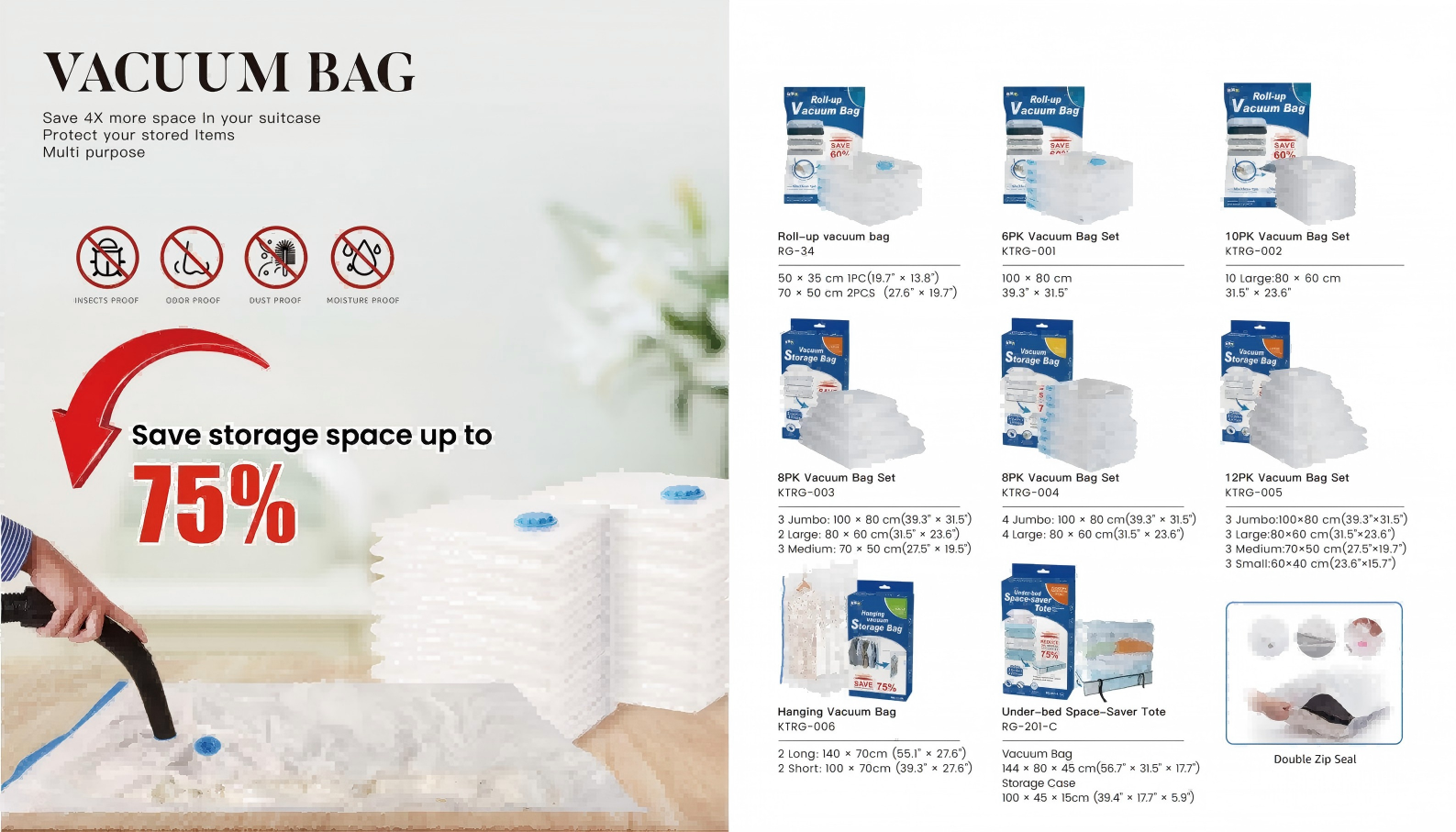
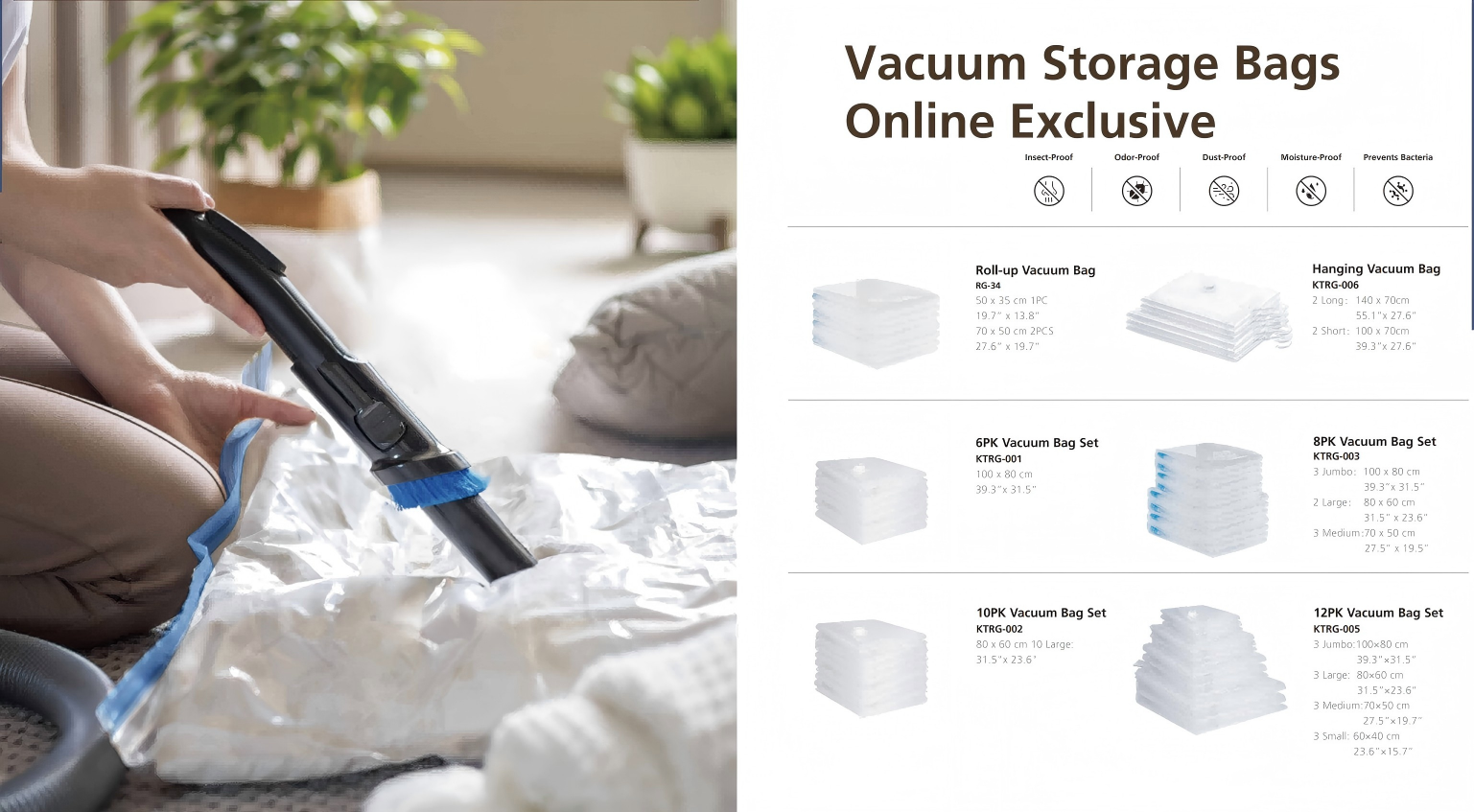
A vacuum storage bag may look simple, but several components determine whether it performs reliably after purchase.
The film is the foundation of the product.
Buyers should review:
Market research currently identifies PA+PE as the largest material segment in the category, although material selection should ultimately depend on the product specification and intended use.
For retailers, the important question is not simply which material is used, but whether the supplier can maintain the same specification from production lot to production lot.
The zipper is one of the most important consumer touchpoints.
A bag can have good film but still fail if the zipper does not close properly.
Buyers should evaluate:
A zipper that looks good in a sample but fails during repeated consumer use can quickly become a return problem.
The valve is responsible for removing air and helping maintain the compressed condition.
A supplier evaluation should therefore consider:
Rather than accepting a generic "compression percentage," buyers should ask suppliers to provide test methods and test conditions behind any compression or air-retention claim.
The connection between the valve, film and sealed areas must withstand normal consumer handling.
Buyers should ask how the supplier controls:
The manufacturing process matters because these parameters can directly influence air retention and product durability.
A professional supplier should be able to explain how quality is checked during production rather than simply showing a final inspection report.
Relevant checkpoints may include:
A showroom sample cannot demonstrate long-term performance by itself.
A stronger buyer evaluation should combine sample testing + factory assessment + production QC documentation.
|
Buyer Concern |
What to Check |
|
Vacuum loss |
Air-retention / leak testing |
|
Film failure |
Film thickness, strength and material specification |
|
Zipper failure |
Closing consistency and repeated-use testing |
|
Valve failure |
Valve sealing and compatibility |
|
Dimension variation |
Production dimensional control |
|
Odour |
Material specification and odour testing where required |
|
Private label |
Packaging, artwork and development capability |
|
Quality consistency |
Production inspection and sampling records |
|
Compliance |
Applicable market-specific documentation |
|
Supply capability |
Production capacity and multi-category sourcing |
This approach gives buyers a much clearer picture of supplier reliability than comparing product photographs alone.
A retailer may not want to manage separate suppliers for every storage category.
A coordinated home-organization program can combine:
This can create a more efficient development process for retailers working on private-label or category-wide programs.
Instead of evaluating a vacuum-bag supplier only on the individual SKU, buyers can assess whether the supplier can support the wider storage category.
For private-label programs, relevant capabilities include:
For retailers building a storage collection rather than purchasing a single item, these capabilities can significantly simplify supplier management.
The main applications are seasonal clothing, bedding, blankets, duvets, pillows and other bulky textiles. They are particularly useful where closet, wardrobe or under-bed storage space is limited.
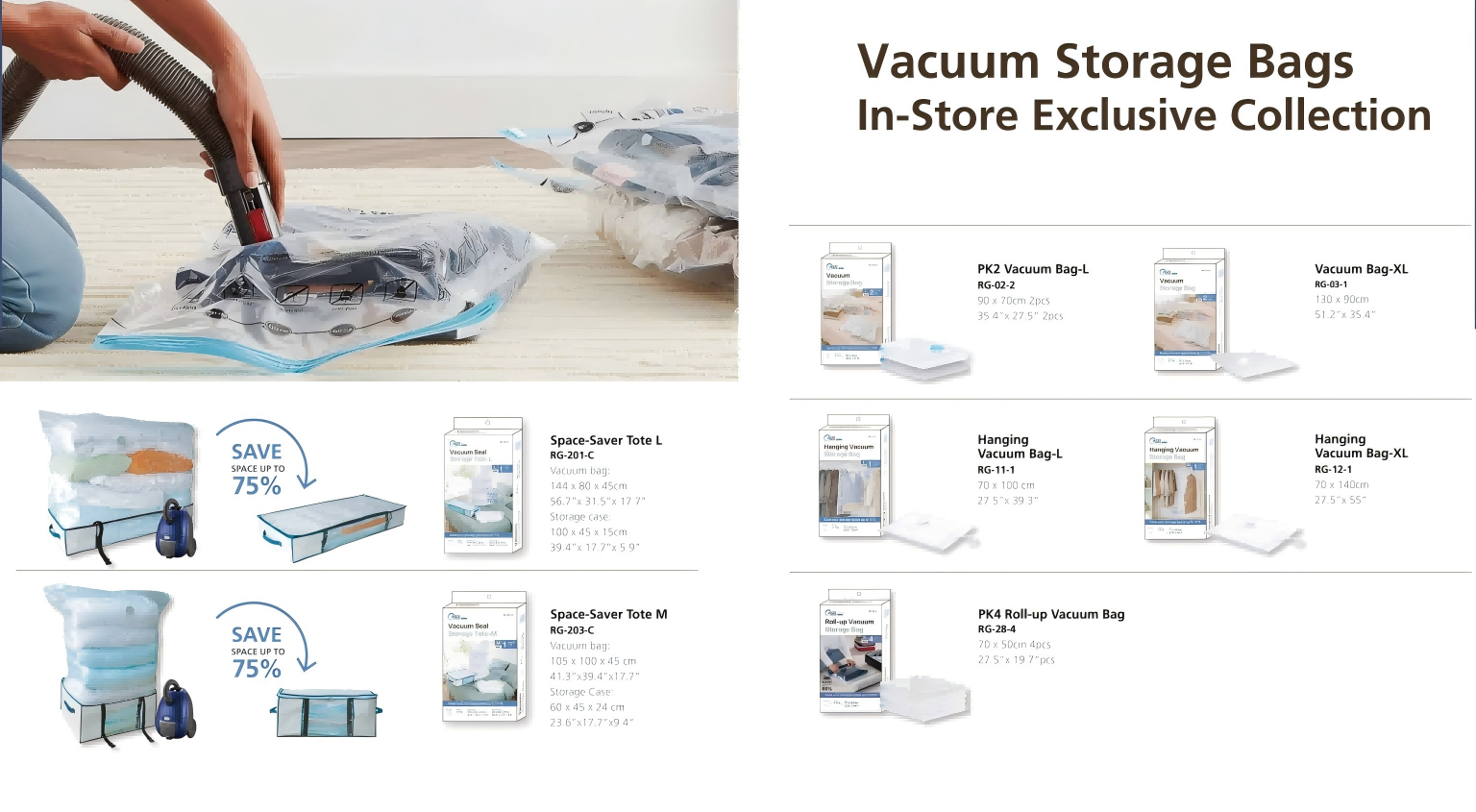
A basic assortment can combine flat bags for clothing and linens, cube bags for bulky bedding and coats, and hanging bags for suits and dresses. The ideal assortment depends on the retailer's target customer and available shelf space.
Avoid evaluating suppliers only by a headline compression percentage. Actual volume reduction depends on the contents, loading method, pump, film structure, valve and test conditions. Buyers should request a defined test method when suppliers provide compression claims.
PA+PE is one of the major material structures used in the category. Current market research estimates PA+PE accounted for approximately 69.4% of the global market by material in 2025.
However, material selection should be evaluated according to the intended application, product specification and target-market requirements.
At minimum, ask about:
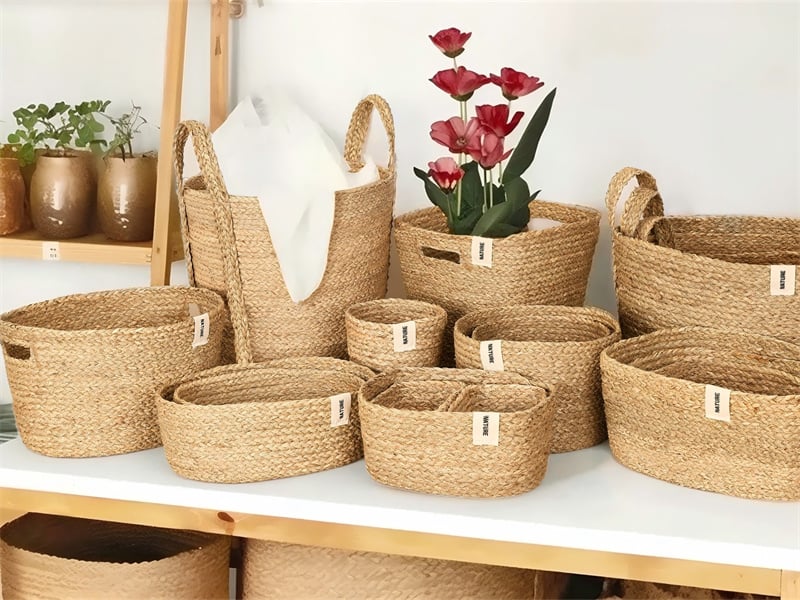
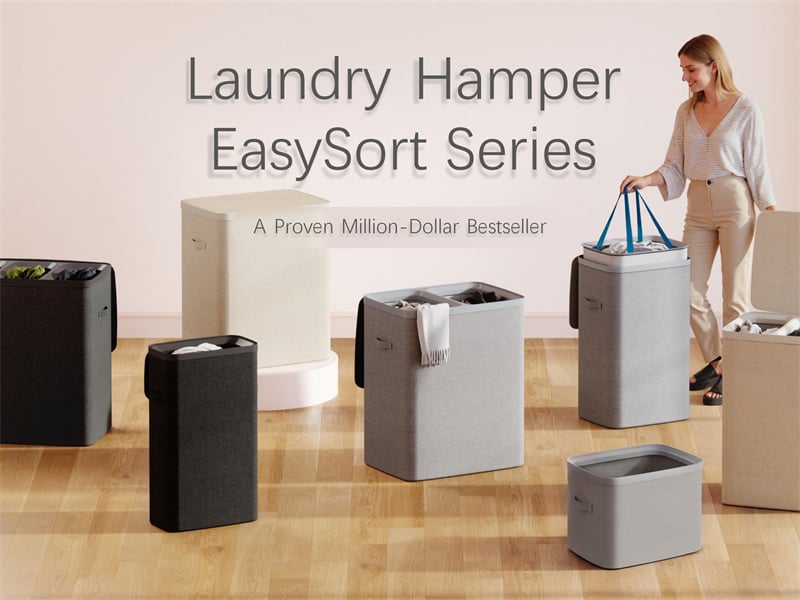
Yes, depending on the supplier's manufacturing and consolidation capabilities. A multi-category manufacturer can potentially combine vacuum bags with fabric bins, plastic storage, laundry products and other home-organization items, reducing the number of suppliers involved in a broader storage program.
Established in Shanghai in 1999, ALL STAR HOUSEWARE LTD is a home-storage manufacturer serving international retail and private-label customers.
The company's product portfolio covers plastic storage, fabric storage, laundry organization, vacuum storage bags, natural woven storage, pet furniture, seasonal storage and storage furniture.
With its own plastic, sewing and metal-frame manufacturing capabilities, together with additional production capacity in Vietnam and Southeast Asia, ALL STAR HOUSEWARE supports retailers looking for both individual products and broader home-organization programs.
The company also has more than 400 product design patents across its product portfolio and maintains an established quality and social-compliance system, including ISO 9001 and relevant BSCI/Sedex programs and audits.
For retailers evaluating vacuum storage bags, the key advantage is not simply the product itself.
It is the combination of manufacturing control, product development, quality management and multi-category home-storage capability.
If you are developing a private-label vacuum storage bag range or looking to consolidate multiple home-storage categories with one manufacturing partner, ALL STAR HOUSEWARE can support product development, specification customization, packaging and broader storage assortment development.

 EN
EN
