A practical guide for retailers, distributors and home-furnishing buyers evaluating storage ottomans, storage benches and private-label upholstered furniture.
A storage ottoman is more than a box with a padded lid.
For retailers, it combines several functions within one furniture footprint: seating, hidden storage, footrest functionality and, depending on the design, easy relocation or foldable storage.
That multifunctional structure makes storage ottomans relevant to bedrooms, entryways, living rooms, dormitories, rental homes and other space-conscious environments. B2B product assortments can also be segmented by shape, capacity, upholstery, size, construction and price positioning.
However, sourcing a successful storage ottoman requires more than choosing an attractive design.
Buyers should evaluate:
The right specification depends on the intended application and target market. There is no single universal size, load rating, foam specification or upholstery performance level that applies to every storage ottoman.
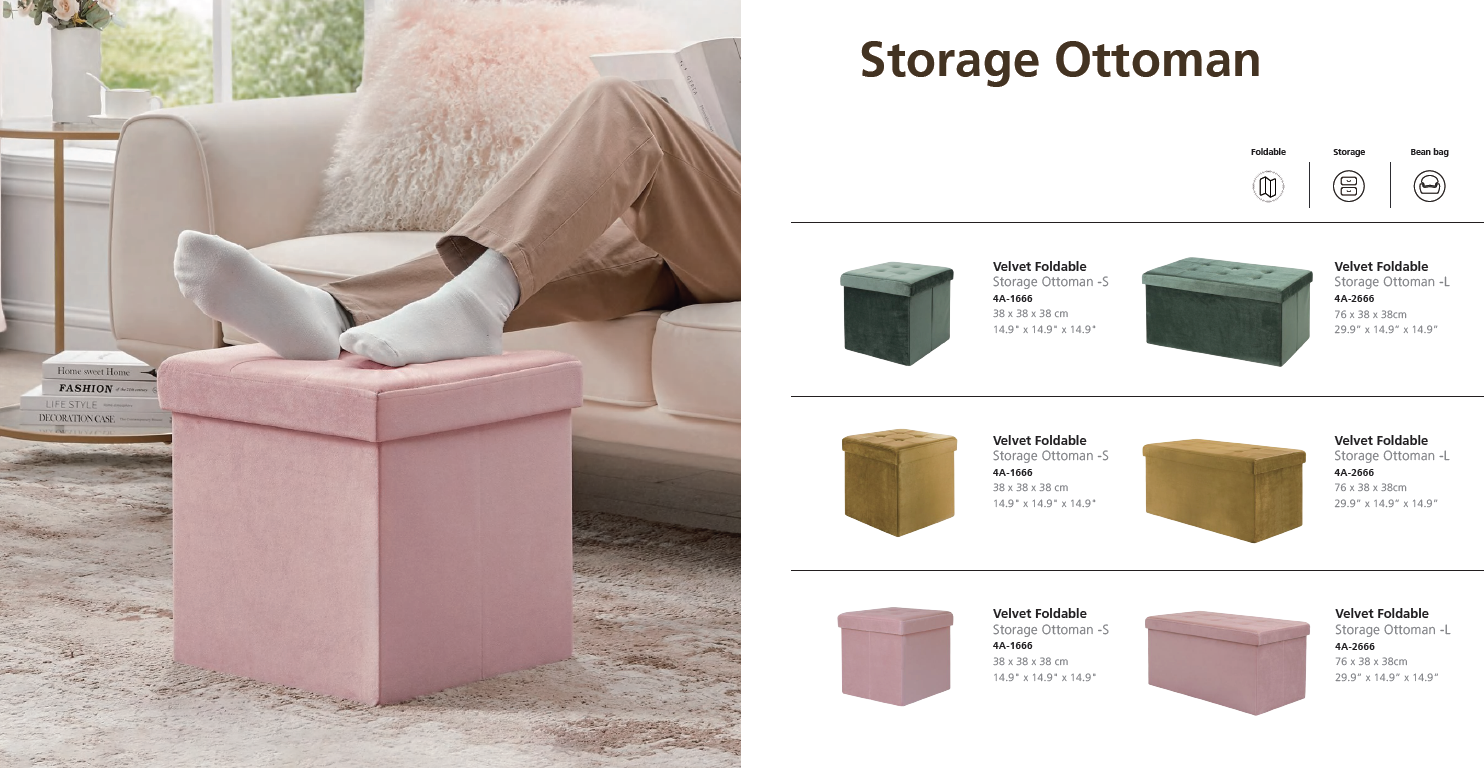
The core commercial proposition is simple:
one piece of furniture performs more than one function.
A storage ottoman can provide a place to sit while putting on shoes, store blankets or clothing beside a bed, serve as a footrest in a living room, or provide occasional seating in a compact room.
This makes the category particularly relevant where consumers have limited floor space.
For example:
For retailers, the same basic product concept can therefore be merchandised around several consumer needs rather than one narrow use case.
The B2B opportunity is not simply "selling storage." It is selling more functionality within the same footprint.
Not every storage ottoman should be positioned in the same way.
Shape influences storage capacity, footprint, visual appearance, placement and price positioning.
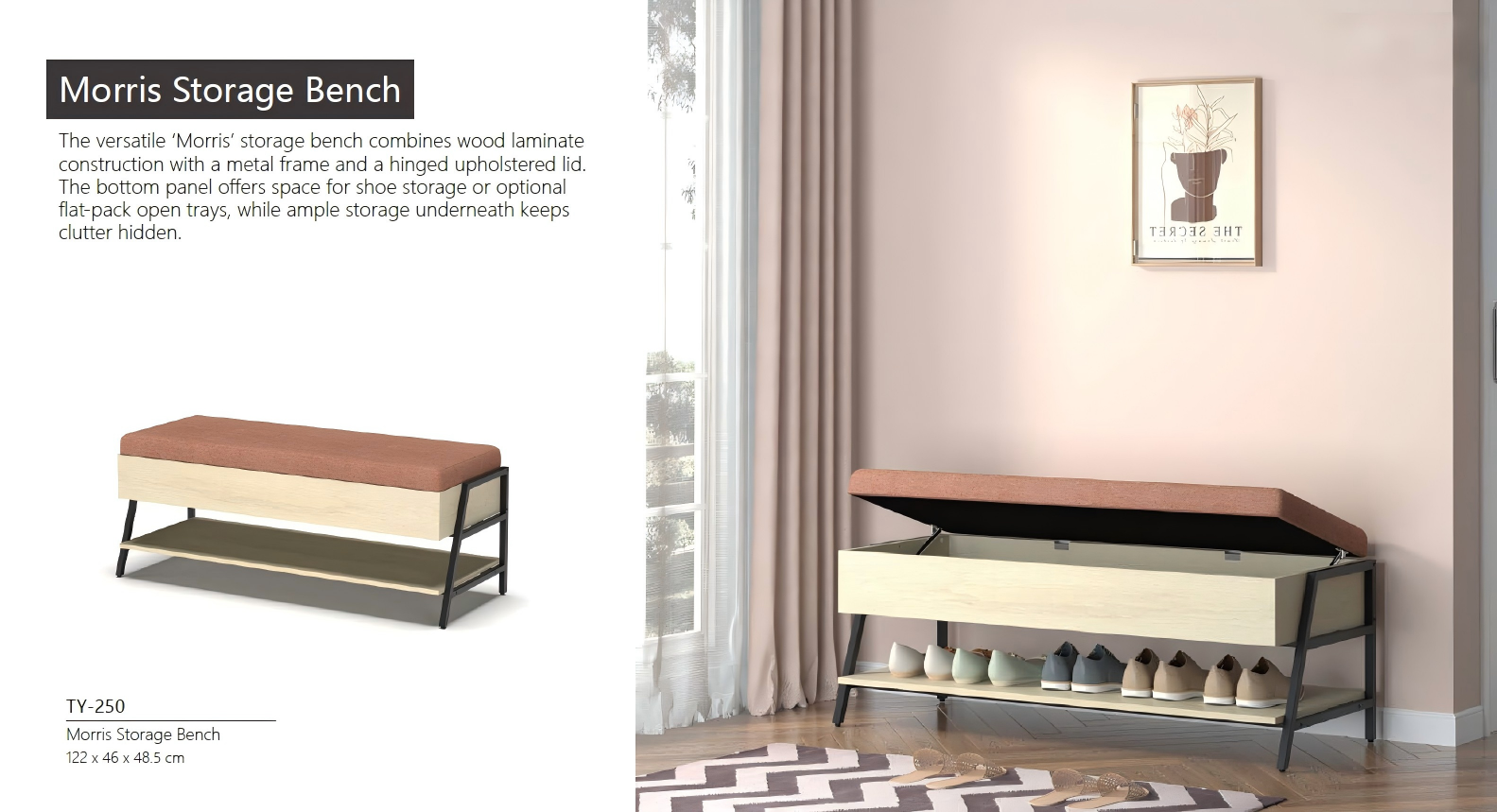
Rectangular ottomans and storage benches are suitable when buyers want to maximize usable storage along a longer footprint.
Typical applications include:
The longer shape can provide more internal storage while creating a usable seating surface.
For retail assortments, rectangular formats can therefore be positioned toward consumers who prioritize capacity and multifunctionality.
Square formats provide a more compact footprint.
They can work beside a bed, near a desk, in a dressing area or in a room corner.
Their smaller footprint can also make them easier to reposition between rooms.
For buyers, the square format can provide a useful option for consumers who want the storage-and-seating concept but do not have enough space for a long bench.
Round storage stools provide another positioning opportunity.
Compared with rectangular storage benches, their value may be more strongly associated with:
The important point is that shape is not simply an aesthetic decision.
It affects the product's intended use, footprint, storage volume, packaging, merchandising and target consumer.
A well-planned assortment can therefore use several shapes to cover different retail needs.
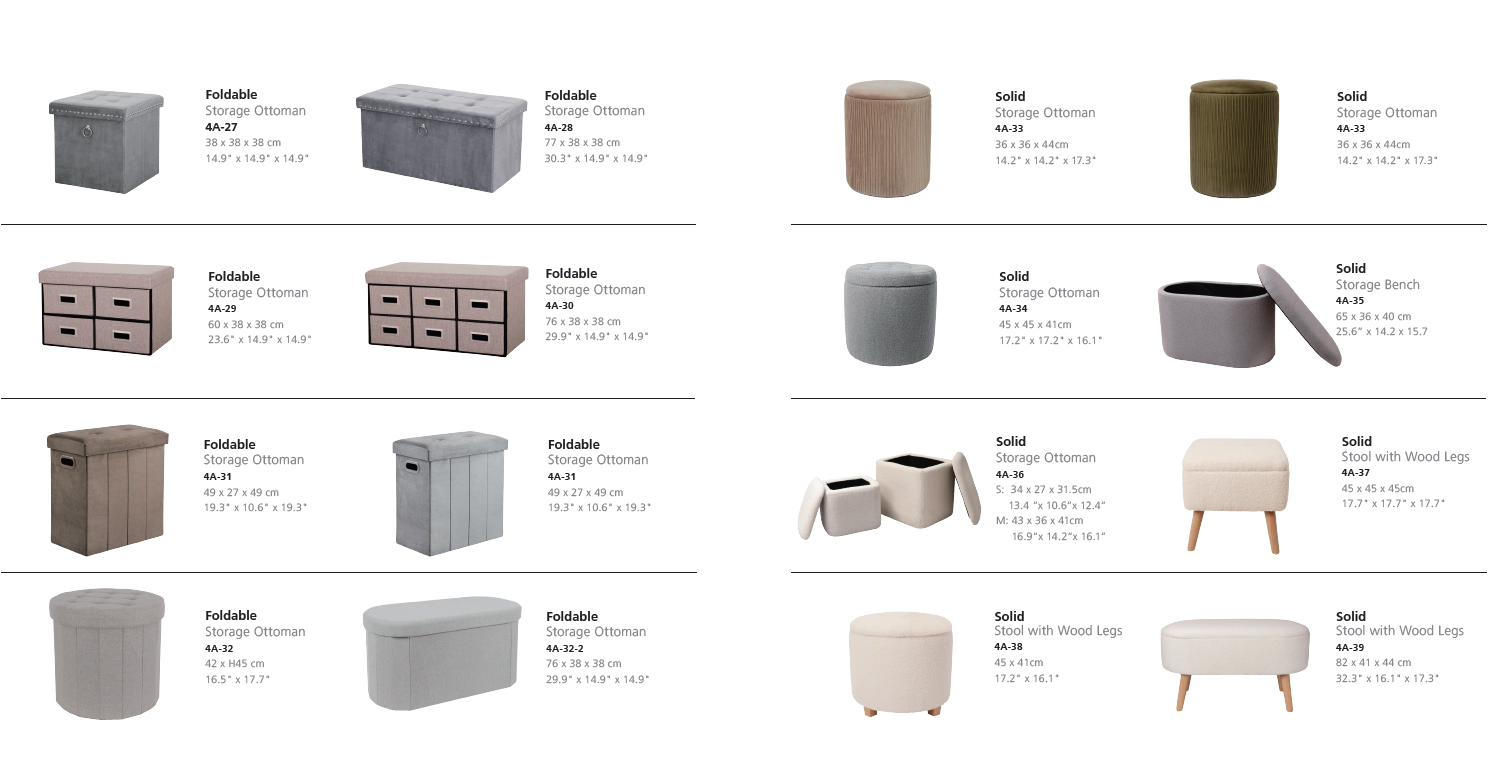
Once the target product format is established, buyers should create a product specification rather than evaluating suppliers only by photographs and quotations.
Important specifications can include:
Define:
Storage volume should be considered together with the product's external dimensions.
A larger external size does not automatically mean a more efficient storage solution because internal usable volume depends on frame construction, padding, lid design and structural components.
Load requirements should be defined according to intended use.
A storage ottoman used primarily as a decorative storage box may have different requirements from a bench intended for frequent seating.
Instead of applying one universal number, buyers should agree with the supplier on:
Where a supplier provides a numerical load rating, buyers should also request the supporting test method or documentation rather than relying only on marketing language.
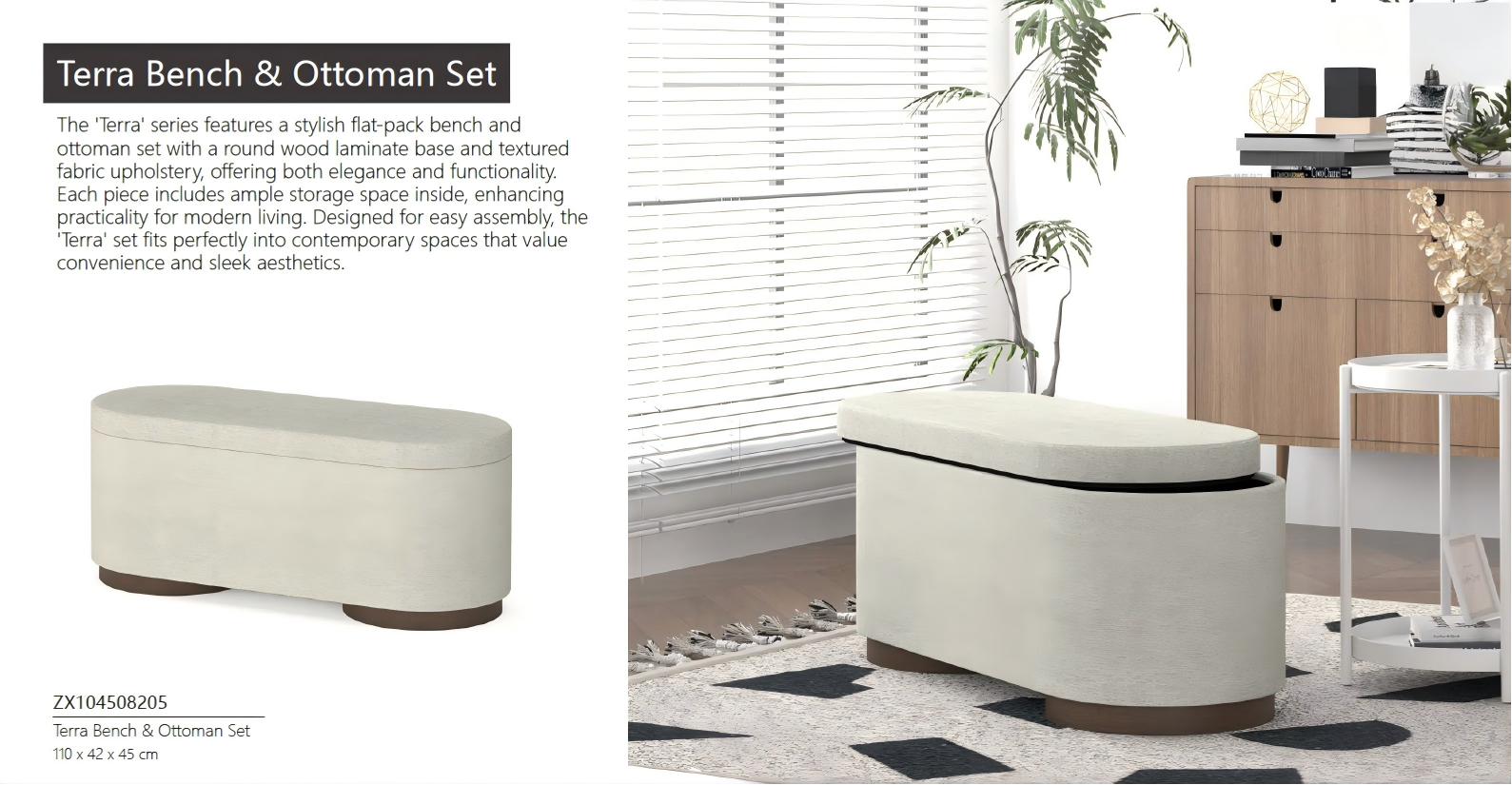
The visible upholstery may determine the first impression, but the internal structure determines how the product is built.
Depending on the design and price positioning, manufacturers may use:
There is no universally superior frame material.
The appropriate construction depends on the product's dimensions, intended load, folding requirements, target cost and manufacturing process.
A buyer should ask:
This is particularly important for private-label products because a small change in material thickness, component dimensions or assembly method can affect the finished product.
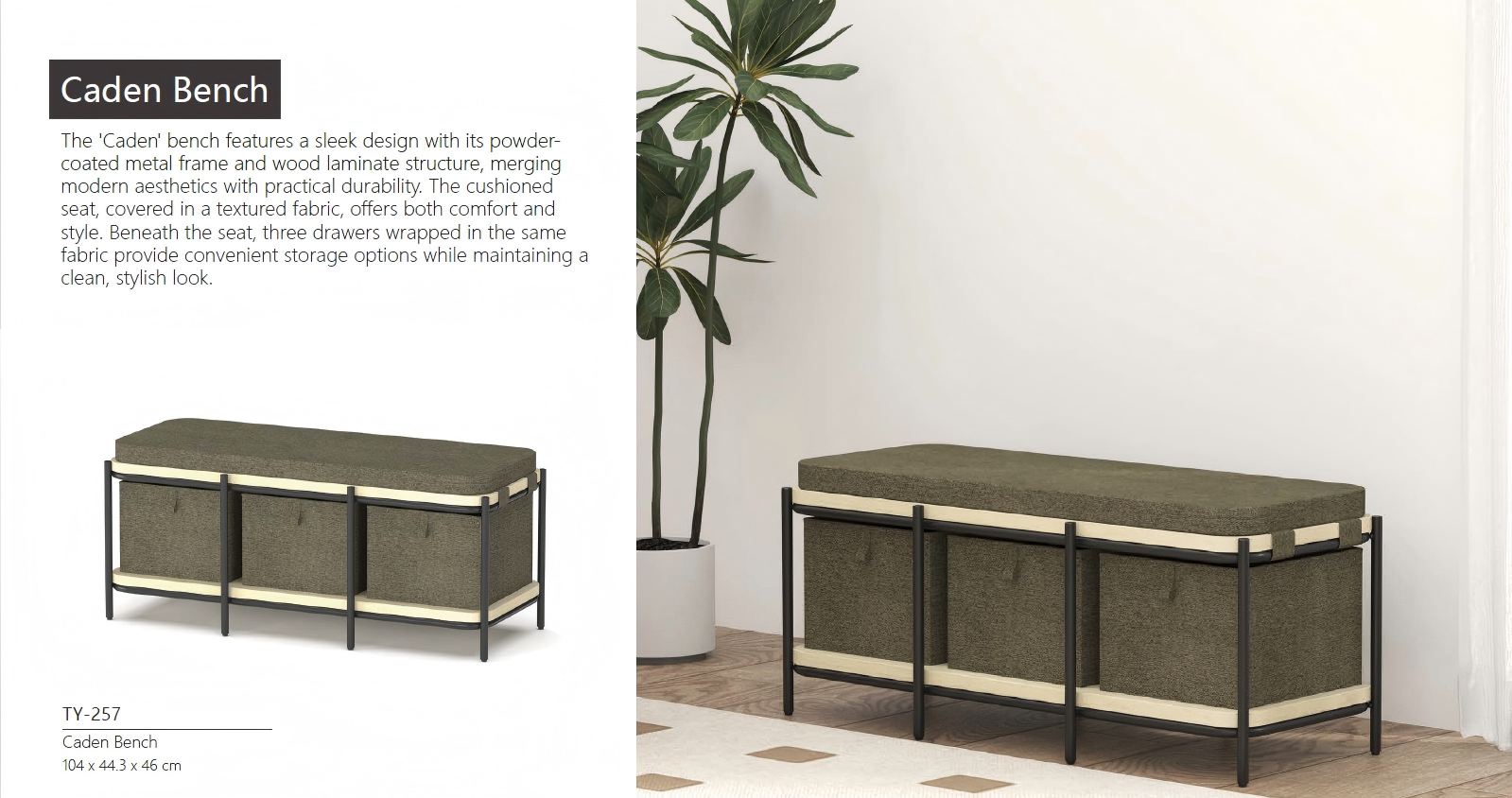
**Available surface fabrics**:
- Velvet
- Teddy fabric
- Faux-linen
- Chenille fabric
- Polyester-linen blend
- PU leather
Fabric selection is another area where buyers should avoid generic specifications.
Relevant factors can include:
Martindale abrasion testing is one established method used for textile abrasion resistance. The appropriate performance requirement, however, should be determined according to the intended application and buyer specification rather than presented as one universal threshold for all storage ottomans.
For example, a decorative bedroom stool and a frequently used entryway bench may require different upholstery specifications.
The same principle applies to foam.
Foam density, firmness and construction should be selected according to the desired seating feel, product structure and intended use rather than applying one universal density as an industry standard.
Foldable construction is particularly relevant to some storage ottoman designs.
For consumers, a foldable ottoman can be easier to:
For retailers and distributors, the benefit can extend to logistics.
A foldable structure may reduce packed dimensions compared with the assembled product, potentially improving:
However, foldability is a product-design decision rather than an automatic advantage.
The supplier needs to ensure that the folding mechanism, structural stability, assembly and packaging all work together.
A rigid upholstered storage bench and a foldable storage ottoman should therefore be evaluated using different product-development criteria.
A professional sourcing process should not rely entirely on final inspection.
A practical quality system can include:
Materials and components can be checked against approved specifications before entering production.
Depending on the product, this may include fabric, foam, wood-based components, metal parts, hardware and packaging materials.
Production checks can cover:
Finished products can be inspected against:
The terminology may vary between manufacturers.
What matters to a buyer is whether the supplier has documented specifications, inspection points, traceability and corrective-action procedures.
Furniture packaging should not be an afterthought.
Buyers should evaluate:
For foldable products, the difference between assembled volume and packed volume can be significant.
For rigid furniture, packaging optimization may instead focus on protection, nesting, component disassembly and carton dimensions.
The most useful question is:
How can the product be designed and packaged together to achieve the required protection and logistics efficiency?
This connects product development with landed-cost management.
Storage ottomans are particularly suitable for private-label development because appearance can be differentiated without necessarily creating an entirely new structure.
Depending on the project, customization may include:
The most important control point is an approved reference sample and documented specification.
This gives the buyer a clear benchmark for mass production and repeat orders.
Buyers planning more home storage broader room assortment welcome Contact : [email protected]

 EN
EN
